About the Project
Despite their importance, longevity, and variety, a study of mantras on their own terms and in their transcultural significance is still largely missing. Mantras have traditionally been studied by Indologists, philologists, and historians who work on elite Sanskrit traditions. Beyond these fields, mantras have rarely been the focus of academic research, and when they are, they often remain confined to national traditions such as India, China, or Japan, or to specific religious frameworks such as Hinduism or Tibetan Buddhism.
This project affirms the value of philological and text historical approaches to mantras. A substantial part of our research examines the histories of mantras based on premodern texts. At the same time, we argue that mantra studies urgently need to expand, linking Indological expertise with anthropology, religious studies, sound studies, art history, and media studies. While previous scholarship has often treated mantras primarily as language, we place special emphasis on the body, the senses, materiality, performance, and oral and aural dimensions.
The MANTRAMS Project follows an interdisciplinary approach. We draw on diverse methodologies to explore mantras from multiple perspectives and to create comprehensive sonic, visual, and digital archives. These archives will document the transcultural and multisensory dimensions of mantras and will culminate in a museum exhibition and a wide range of publications and digital outputs.
We embrace a diversity of perspectives and research practices. No single viewpoint is treated as universally valid or inherently superior. Team members reflect critically on their own positions in relation to the communities and materials they study. This openness and self-reflection allows the project to benefit from a wide range of approaches, including the perspectives of practitioners, scholar practitioners, heritage learners, and practice-based researchers.
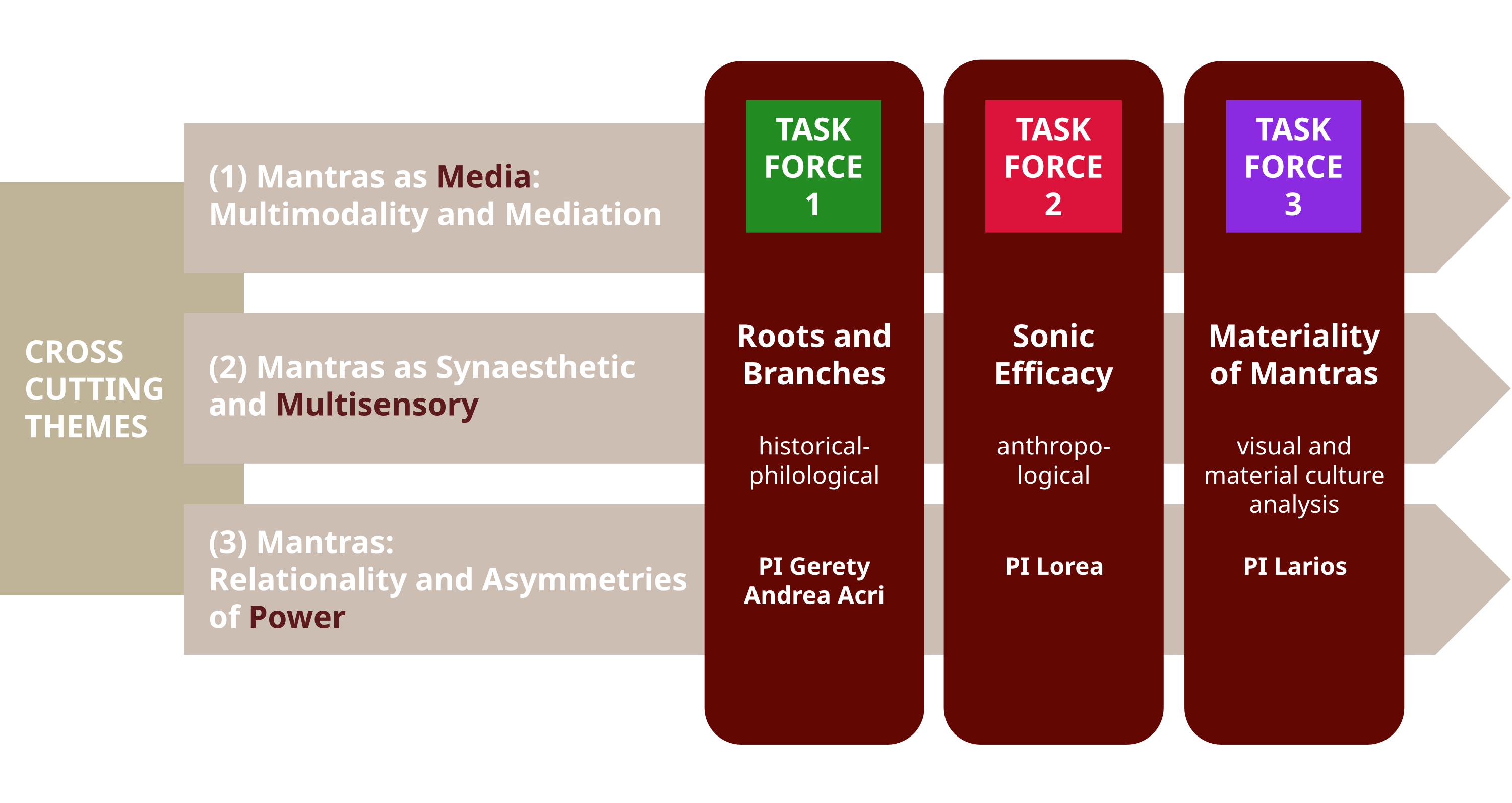
Our research is structured around three central themes that connect the disciplines and organisational units of the project. These are (1) Mantras as Media, (2) Mantras as Synaesthetic and Multisensory, and (3) Mantras and the Dynamics of Power.
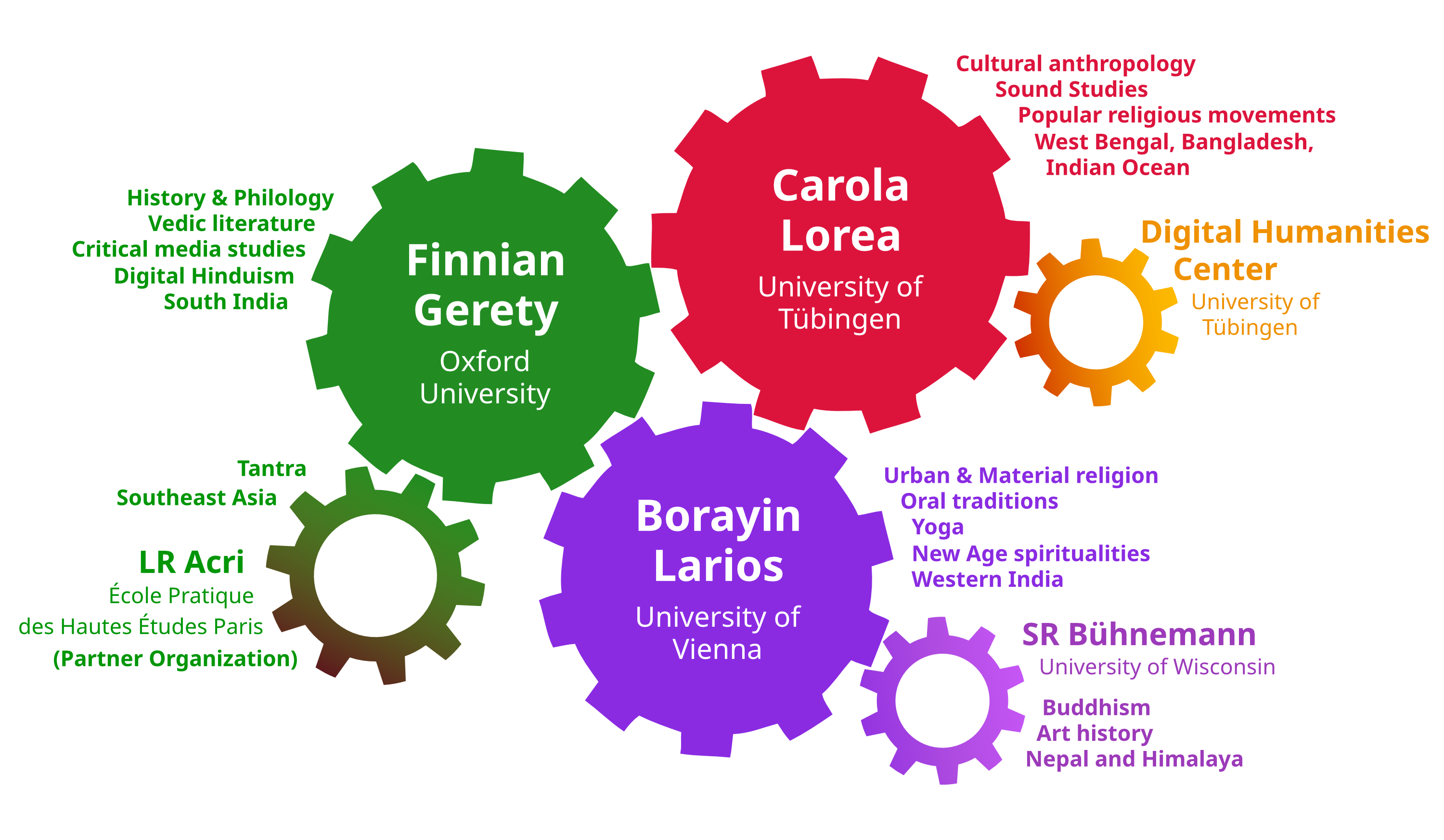
To translate our intellectual agenda into concrete research, the project is organised into three Task Forces (TFs) and eight Research Components (RCs). Each Task Force focuses on one of the central themes and is coordinated by a Principal Investigator (PI). Although all Task Forces use mixed methodology and work with an interdisciplinary team, TF1 is predominantly historical and philological, TF2 is primarily anthropological, and TF3 places special emphasis on visual and material culture.